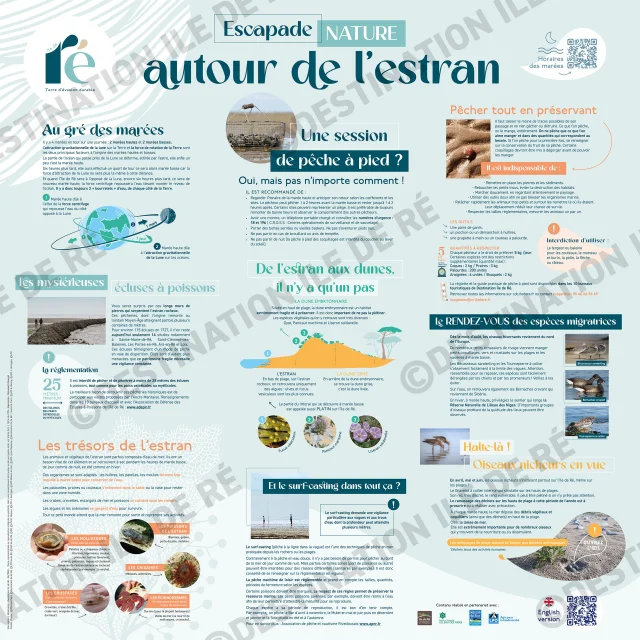
Raising awareness of the foreshore

Ajouter aux favoris

From foreshore to dune seaside flora

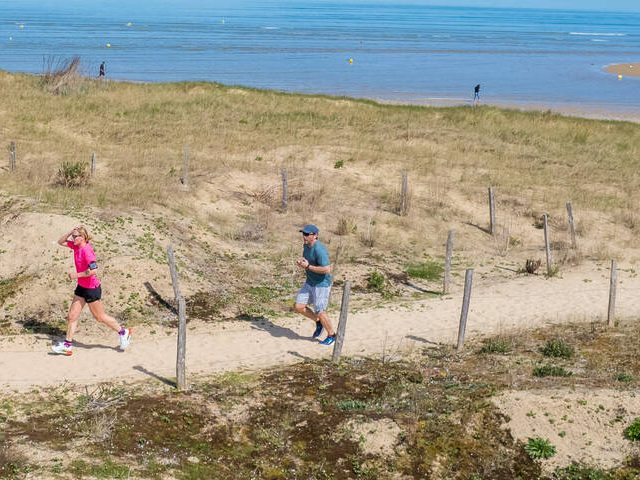
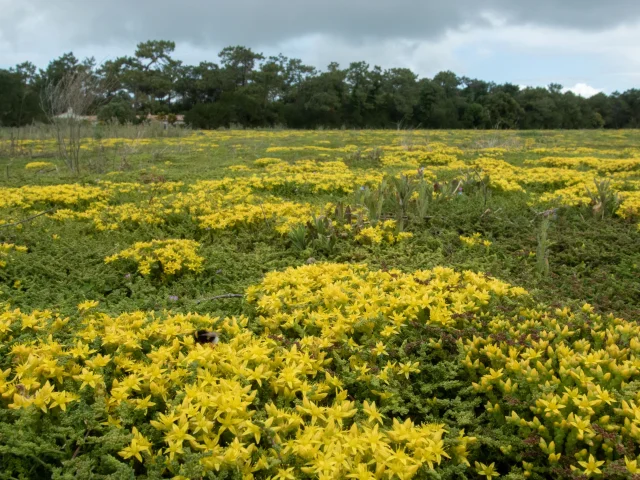
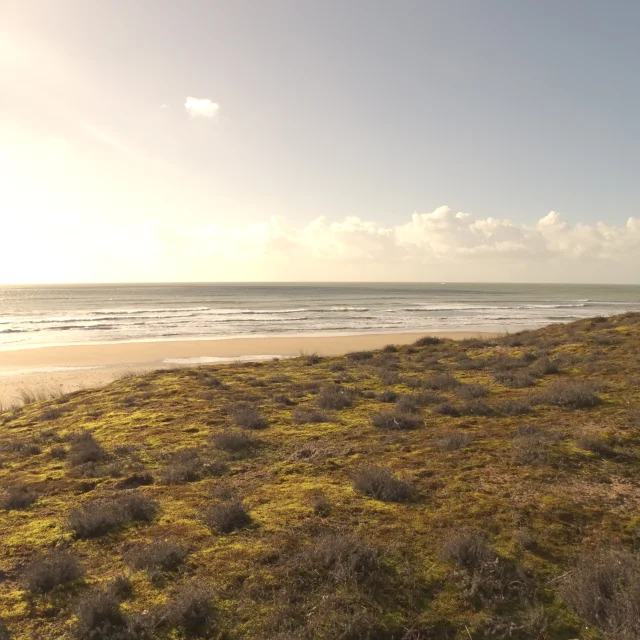
At the top of the beach is the embryonic dune, an extremely fragile habitat that it is essential to preserve. Please do not trample it to protect the plants that grow there. Typical species include :

  • Oyat, which helps to bind the sand,
  • Sea Panicum, recognisable by its bluish leaves,
  • and Bindweed, whose pink flowers adorn the sand.

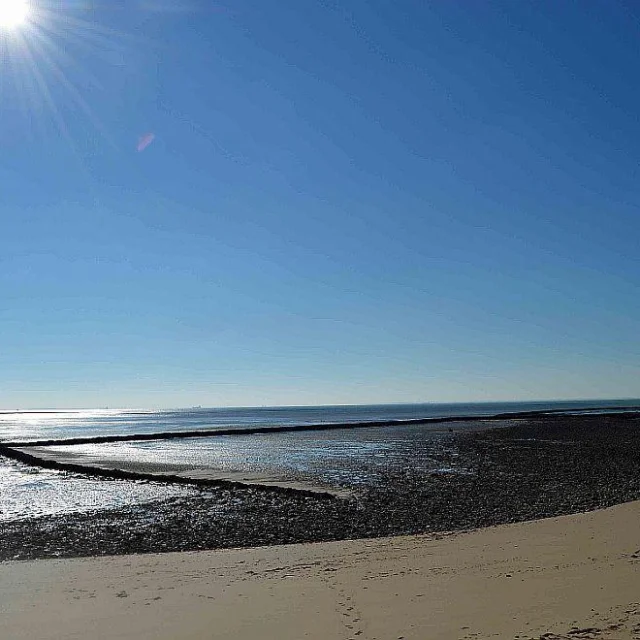
Behind this first dune rises the grey dune, or fixed dune, which is more stable and home to a different flora. At the bottom of the beach, the part of the coastline uncovered at low tide, known as the“platin” on the Ile de Ré, is the rocky foreshore. This is the domain of seaweed, particularly ulva (or sea lettuce) and bladderwrack, well known to walkers.
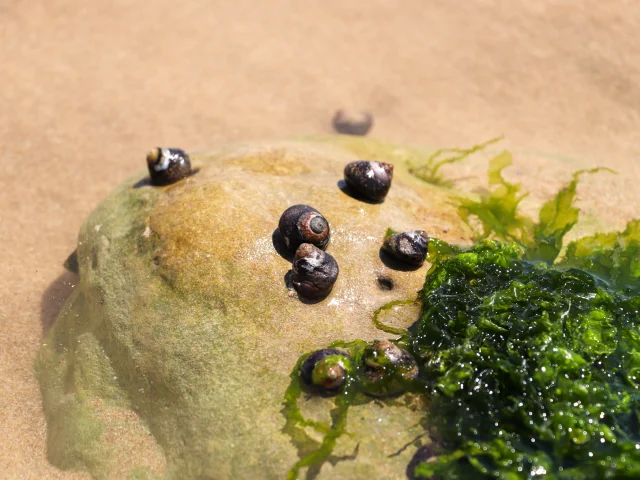
Foreshore flora and fauna

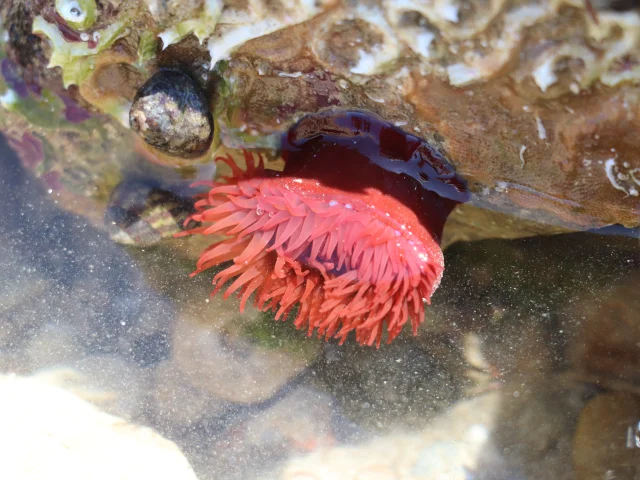
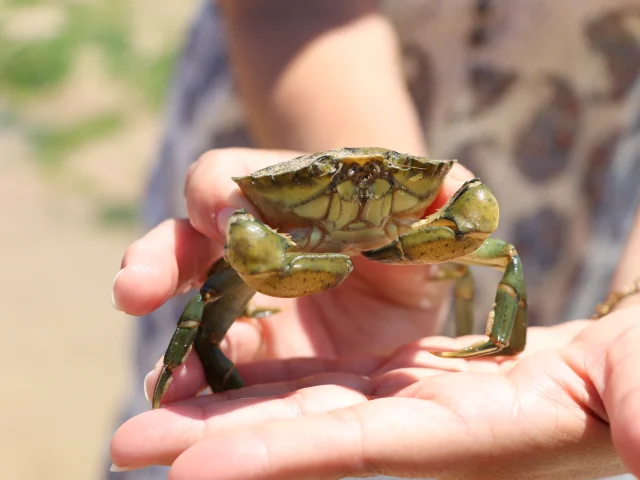
On the foreshore, life adapts to the rhythms of the tide. Marine organisms, often made up largely of seawater, have to withstand the times when the sea withdraws and they find themselves dry. To survive, each has its own strategy:

  • Oysters, mussels and limpets close their shells to conserve water.
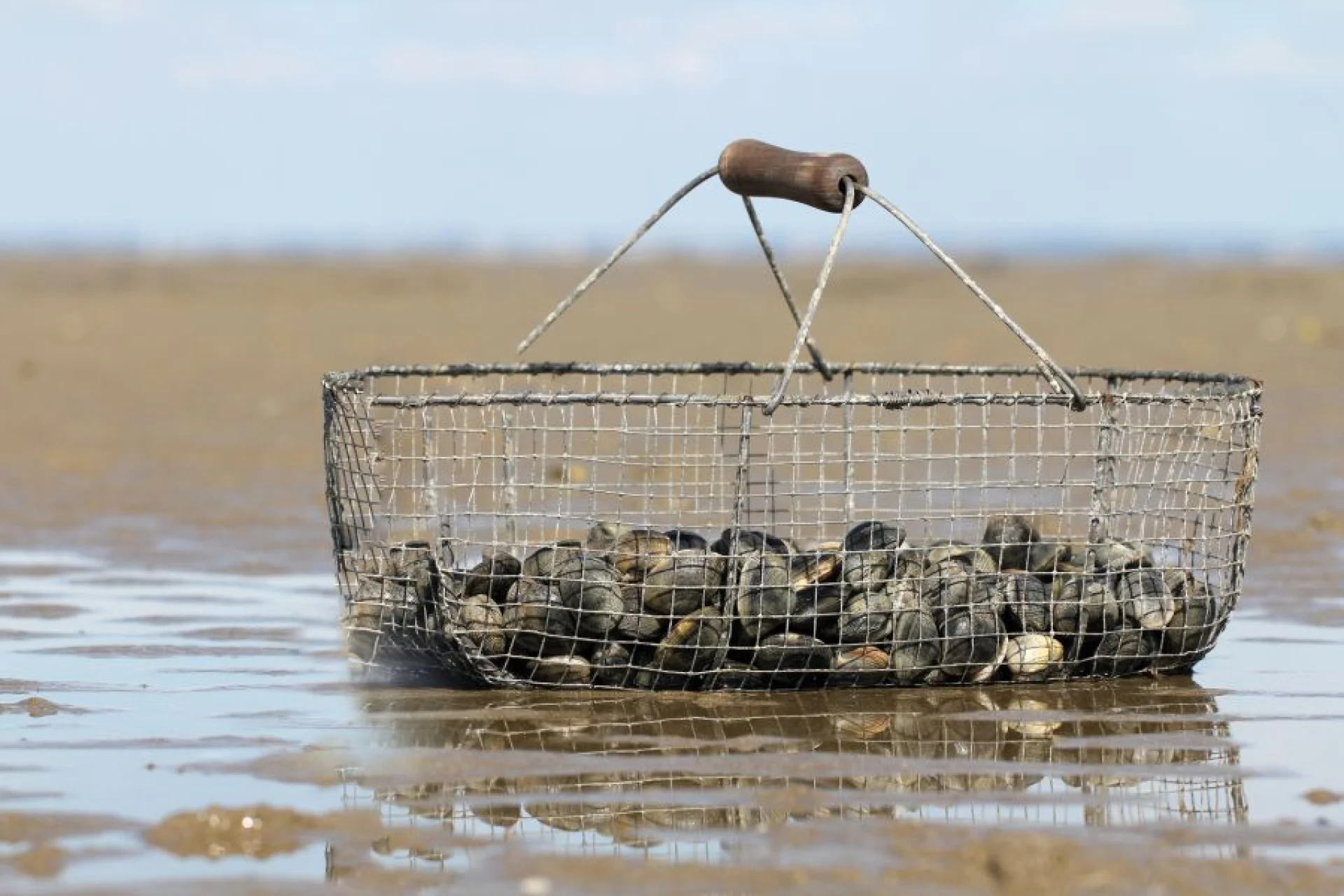
  • Clams, razor clams and razor cl ams bury themselves in the sand or mud.
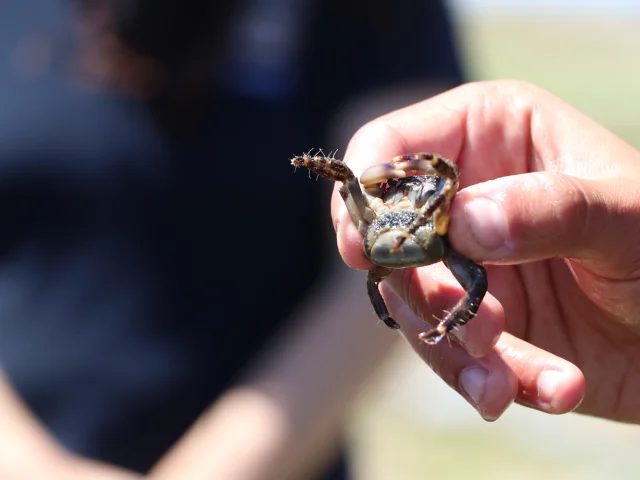
  • Crabs, prawns, sea snails and small fish hide under rocks.
  • Seaweed and sea anemones gorge themselves with water to keep from drying out.

When the tide comes back in, all this life starts up again: a fascinating natural ballet to observe, with respect for the environment.

The tides how it works

Every day, the sea rises and falls twice: there are two high tides and two low tides, each lasting around six hours.

This phenomenon is due to the attraction of the moon on the oceans, which causes a slight deformation of the earth’s surface. When the earth, moon and sun are aligned, this attraction is stronger: the sea rises higher and falls lower. These are the spring tides, whose coefficient generally varies between 80 and 120.

Twice a year, in March and September, the force of the sun is added to that of the moon: these are known as equinox tides. These periods offer the highest tidal ranges of the year.

Life on the foreshore

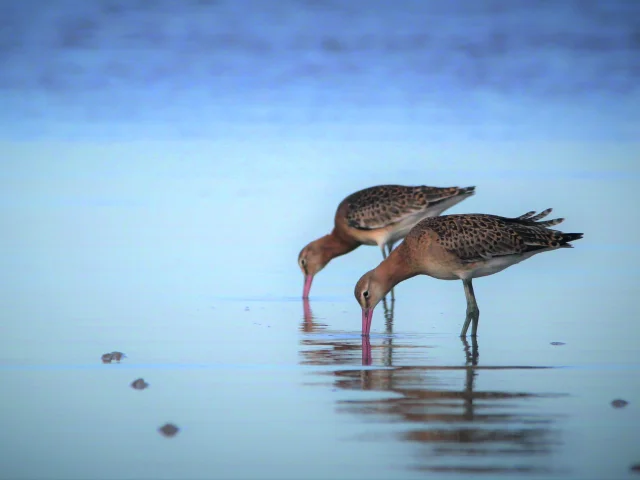
The foreshore, the area uncovered at low tide, is home to an incredible diversity of species adapted to a changing environment.

Fishing on foot what to do before you leave

When practised at low tide, fishing on foot is a convivial activity that is close to nature. But it does require caution and respect for the environment. Here are a few essential recommendations before you set off.

Before setting off

  • Check the tide times: find out when the tide is low and plan your return accordingly. You can fish 1 to 2 hours before low tide and stay for up to 1 or 2 hours afterwards, depending on the coefficient and the fishing site. Some areas can become dangerous: always go back before the tide and watch the other anglers.
  • Make sure you are properly equipped: a watch, a charged telephone and emergency numbers to hand: 18 or 196 (CROSS – Centres opérationnels de surveillance et de sauvetage).
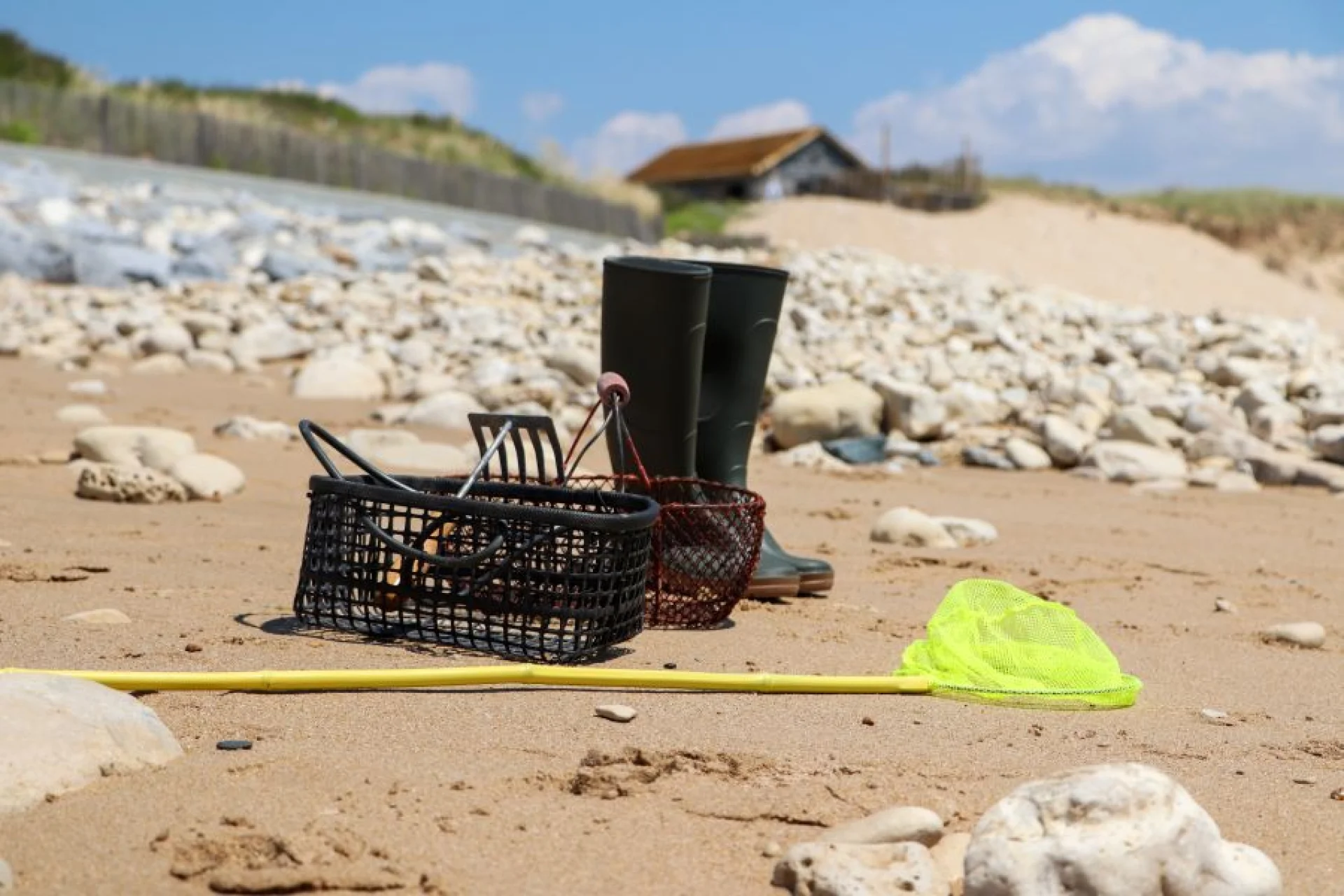
  • Wear suitable footwear (tight boots or old trainers). Do not venture out barefoot.
  • Don’t go out in fog, storms or at night: shellfishing is prohibited between sunset and sunrise.
  • Check the sanitary quality of the shellfish: some areas are unfit for consumption.

Find out more on the Maritime Affairs website or from the Communauté de Communes eco-guards.

> On the Ile de Ré, fishing on foot is prohibited:

  • on the northern beach of Rivedoux-Plage
  • in the Lilleau des Niges and Fier d’Ars nature reserves
  • as well as in harbours and channels
  • within 25m of farming concessions (oyster beds)

Responsible fishing make yourself "very small

The golden rule: don’t leave any trace of where you’ve been.

Only take what you intend to eat, and in reasonable quantities. If you’re just starting out, find out how to preserve your catch: some shellfish need to drain before being eaten.

Fishing Tools Alizee Russeil

The tools

  • A pair of gloves
  • An oyster pick
  • Possibly a clam digger

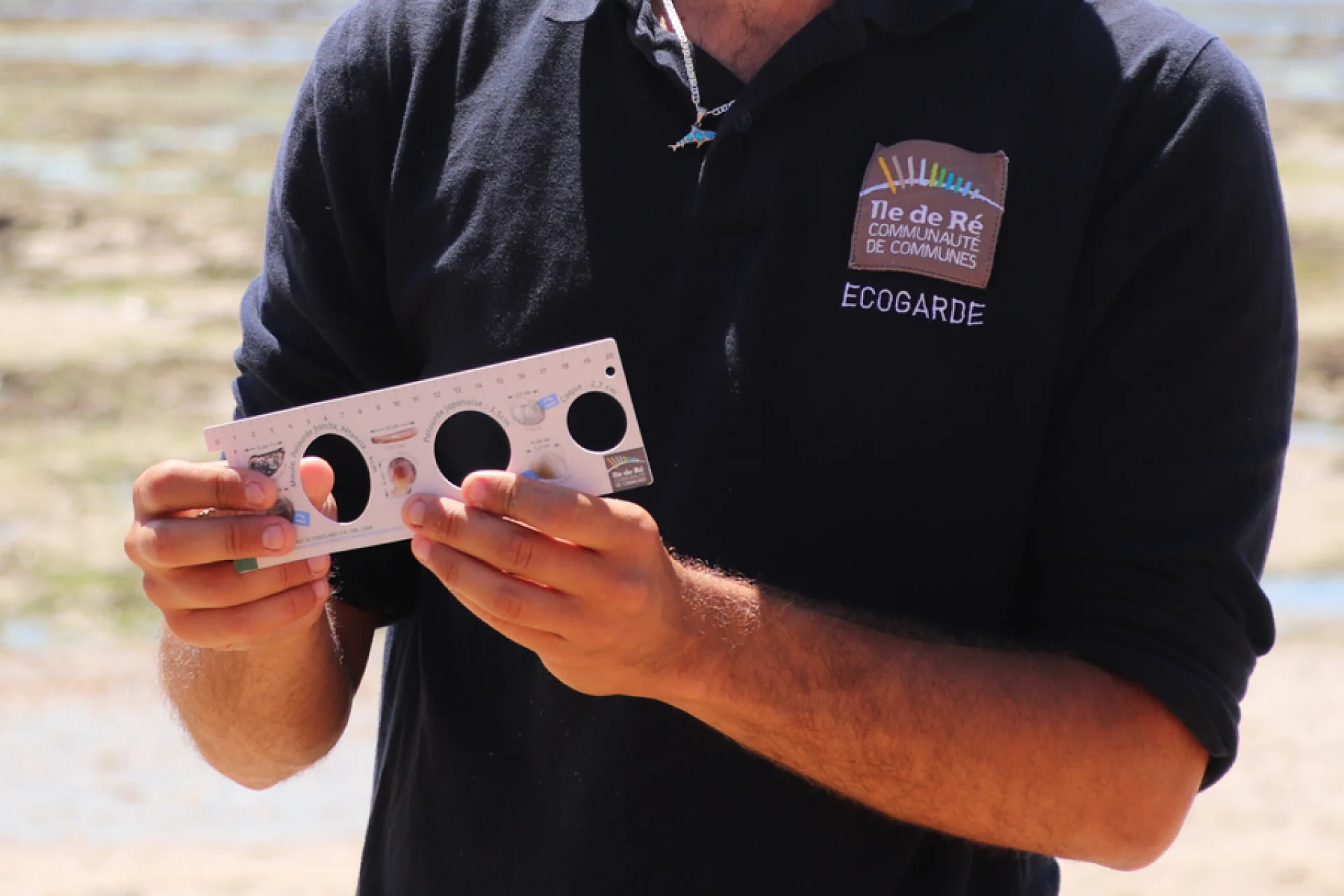
Essential: a ruler to measure your catch and a scale to check the total weight of your basket . Not allowed: fergeon or whalebone (for knives), hammer, chisel, shovel, arrow or rake.

Pecheapied Thomas Pajot

Quantities

Each angler is entitled to catch 5kg/day. Some species have additional restrictions (maximum quantity):

  • Cockles: 2kg
  • Prawns: 3kg
  • Clams: 200 units
  • Spiders: 6 units
  • Bouquets: 2kg
Reglette Peche A Pied Sortie Ecogardes Alizee

Find out more

The reglette and the practical guide to fishing on foot are available from the 10 reception desks of the Destination Ile de Ré Tourist Office. Find all the information on the Communauté des communes de l’île de Ré website

Things to remember

  • Put stones and sediment back where they belong
  • Fill in holes to avoid destroying habitats
  • Walk slowly and observe the landscape
  • Use soft tools to avoid injuring marine organisms
  • Release animals that are too small in the exact place where they were found
  • Respect regulatory sizes and measure catches one by one
  • Comply with current regulations

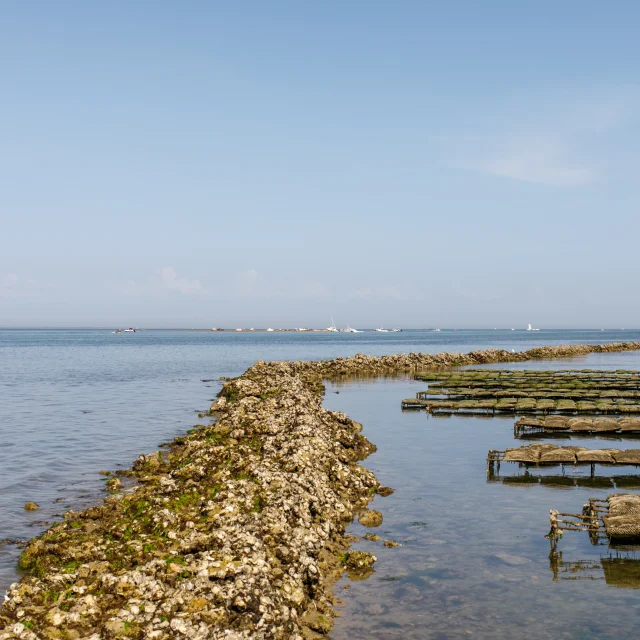
Fish locks a unique heritage of the Ile de Ré

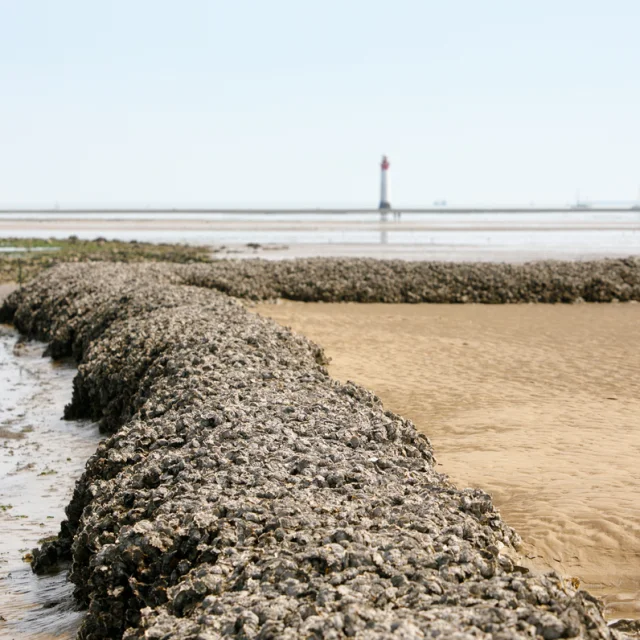
You’ll be amazed by the long stone walls that wind their way along the rocky foreshore. These traditional fisheries, which date back to the Middle Ages, can be several hundred metres long.

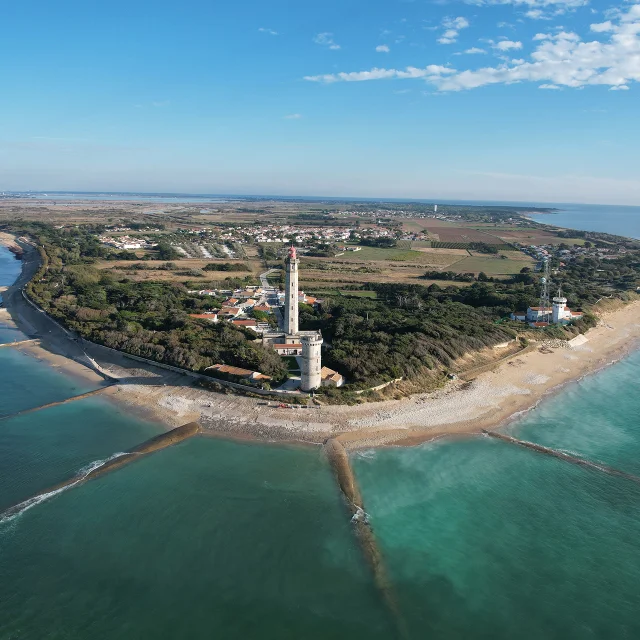
In 1727, there were around 115 fish locks on the Ile de Ré.Today, only 14 remain, located in Sainte-Marie-de-Ré, Saint-Clément-des-Baleines, Les Portes-en-Ré, Ars-en-Ré and Loix.

These locks bear witness to an ancestral fishing method that is now disappearing. As part of our fragile maritime heritage, they require constant vigilance and maintenance if they are to be preserved.

How it works

When the tide rises, the lock fills naturally: fish and molluscs enter with the current. Then, when the tide goes out, the water slowly drains away while the fish, guided by the stone wall, find themselves trapped inside.

The principle is simple and ingenious: use the tide as a fishing tool, without gear or motor.

Protection rules

It is strictly forbidden to fish or to enter within 25 metres of fish locks, or near oyster or mussel farms.

These areas are protected zones that contribute to the ecological and cultural richness of the Retais coastline.

Discover the locks

The best way to discover these remarkable structures is to take part in the guided tours offered by theAssociation de Défense des Écluses à Poissons de l’Ile de Ré (ADEPIR).

  • Information is available from the 10 Destination Ile de Ré offices.

Angling along the coast or surfcasting

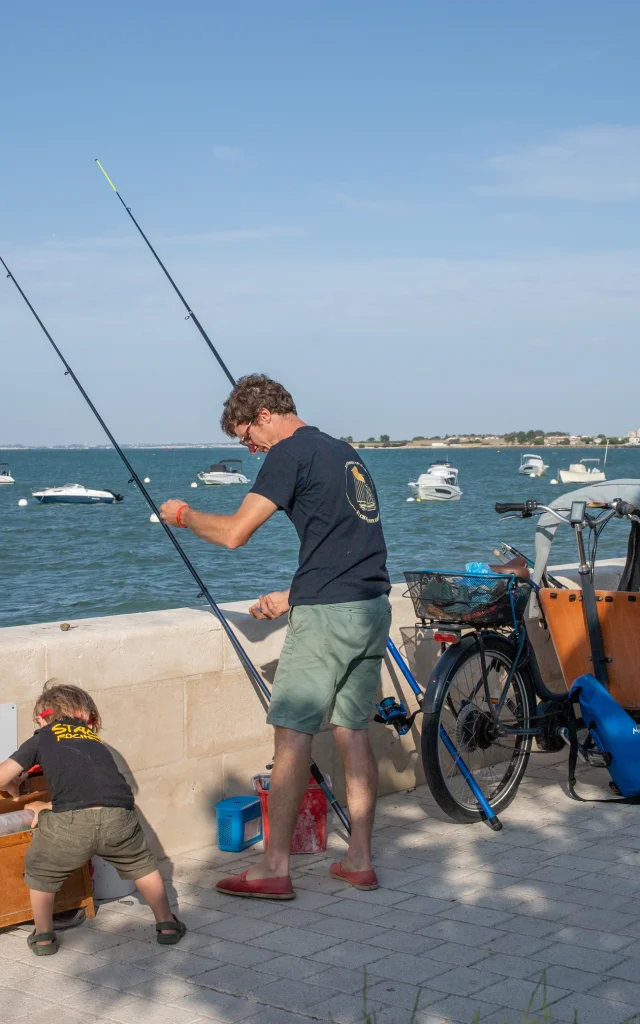
Surf-casting, literally “fishing with a line in the wave”, is a sea-fishing technique practised from rocks, beaches or dykes. Accessible and popular, it allows you to experience the ocean to the full while respecting the environment.

Unlike freshwater fishing, you don’t need a licence to fish by the sea, day or night. However, certain areas, such as marinas or protected sites, may be off-limits for health or safety reasons. We strongly advise you to find out about local regulations before setting off.

A regulated activity

Recreational sea fishing is regulated: minimum catch sizes, authorised quantities and closed seasons vary according to the species. Some fish must also be marked.

Compliance with these rules is essential to preserve marine resources. Juvenile fish must be released immediately so that they reach the maturity required for reproduction. As each species has its own reproduction period, it is important to take this into account.

For example:

  • Sea bass can be caught from April to November
  • Mullet in May-June and December-January
  • Sole is caught in summer and autumn

Caution and safety first and foremost

Surf-casting requires particular vigilance in the face of waves and water holes, some of which can be several metres deep. Even when fishing from a breakwater or slipway, it’s essential to keep an eye on the swell and sea conditions.

If in doubt, always ask before fishing.