





Come and admire the woodcutter's bench
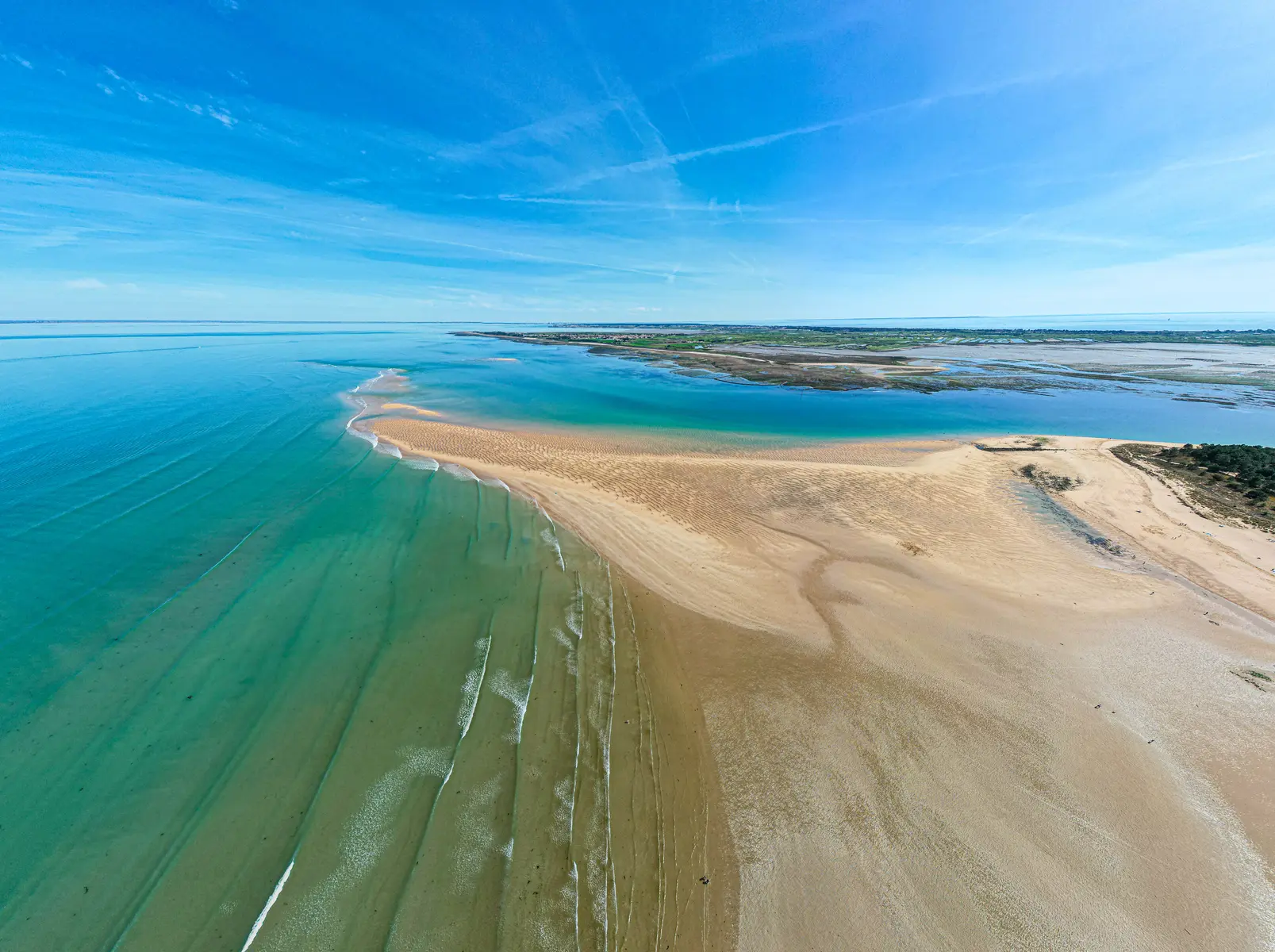
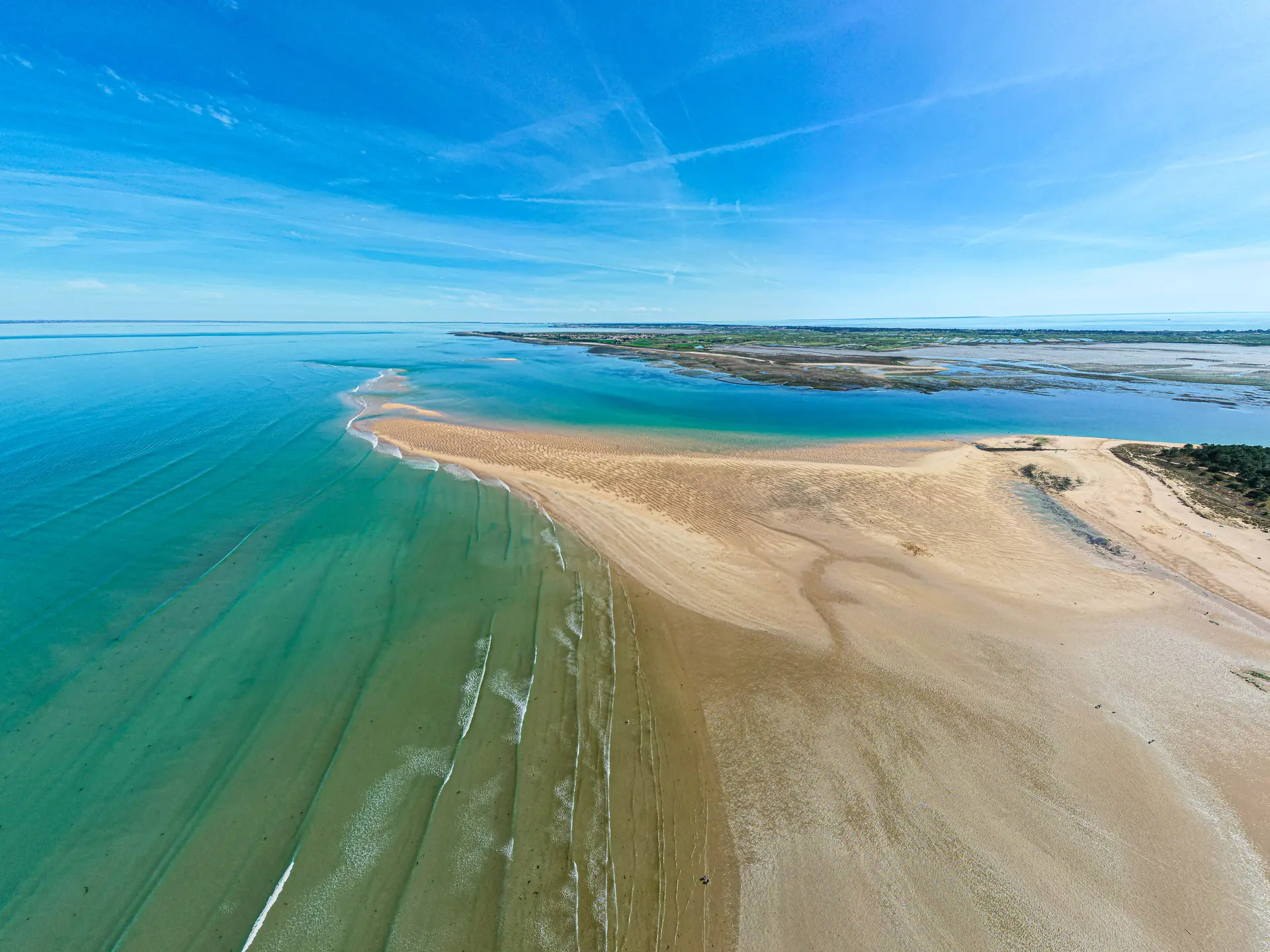
It's a tongue of sand about 4.5 km long when the tide is at its lowest. It then almost forms the link between Trousse-Chemise beach, where it begins, and the Loix peninsula, but never fully connects the two.
It is often used by passing visitors or yachtsmen with their boats, and it is possible to fish on foot or have a picnic during a break between 1.5 hours before low tide and 1.5 hours before high tide. That's around three hours in which to enjoy this exceptional territory.
While the term "banc" is relatively simple to understand, one might wonder about the term "Bûcheron". The term comes from the word "bec", which in this case is not related to the bird, but to a sandy point jutting out into the sea, as the Retais call it. On old maps, the name "Becheron" was also used to describe this sandy spit, and became "Bûcheron".
This famous phenomenon, which continually feeds the Bûcheron shoal, is not expected to stop for a long time to come. In fact, it's not out of the question that one day the latter will be so large and high that it will block the Fier d'Ars for good. Back in 1860, people in Les Portes-en-Ré were already worried that this might happen!
It is often used by passing visitors or yachtsmen with their boats, and it is possible to fish on foot or have a picnic during a break between 1.5 hours before low tide and 1.5 hours before high tide. That's around three hours in which to enjoy this exceptional territory.
While the term "banc" is relatively simple to understand, one might wonder about the term "Bûcheron". The term comes from the word "bec", which in this case is not related to the bird, but to a sandy point jutting out into the sea, as the Retais call it. On old maps, the name "Becheron" was also used to describe this sandy spit, and became "Bûcheron".
This famous phenomenon, which continually feeds the Bûcheron shoal, is not expected to stop for a long time to come. In fact, it's not out of the question that one day the latter will be so large and high that it will block the Fier d'Ars for good. Back in 1860, people in Les Portes-en-Ré were already worried that this might happen!